
Week 20-25 - Curiosities
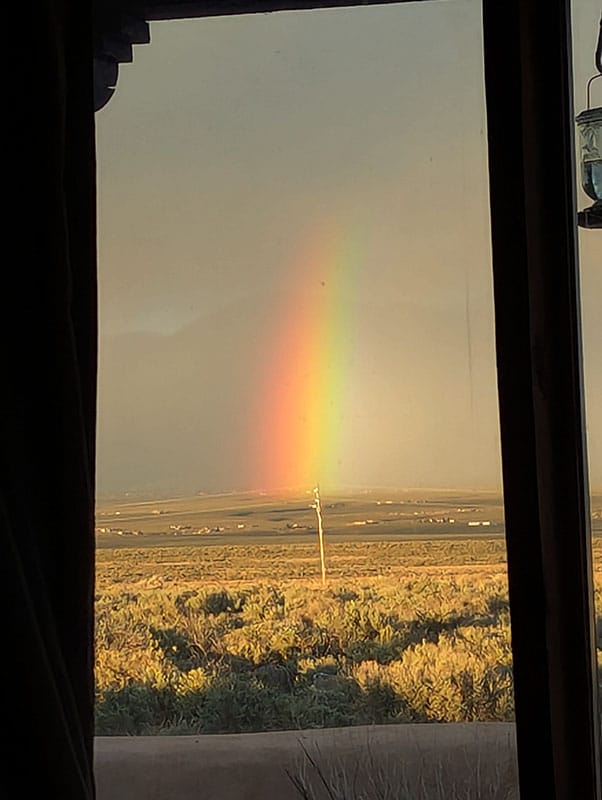
Greetings from the Mesa
Time keeps on ticking. Ticking. Ticking. Into the future... We are just off back to back visits from family which was really nice. Garden season is in full swing - starts have been potted up, and the species Tulips are blooming. Yesterday the first Mockingbird arrived and is singing up a storm. The finches seem perturbed. Been trying to get back on track creatively by drawing something "real" every day. I have an itch to do more mini-zines to scratch too. Also busy prepping my old animation 10950 Parts I and II to show in town in June/July. I really need to digitize parts 3-5 which are mostly complete art-wise. The studio is lonely.
Curiosities of the Week
- "What the senses present to us really is a rickety simulacrum" A dive into Inka Eissenhigh's paintings by George Saunders. (Paris Review) Saunders does a great job describing what it is that makes Eissenhigh's work so compelling.
- Scientists issue urgent warning after alarming collapse of bird populations (TCD) This makes me so sad, as bird watching brings so much joy.
- "We are in a Moment of Unparalled Peril" (The American Prospect) Naomi Klein speaks of apocalypic futures and survival.
- Immigrants Are Part of the Fabric of Our Country (The Nation)
- Eleven Tips for Using SciFi in Futures Work (Karl Schroeder/Substack)
- Maga's Era of 'Soft Eugenics': let the weak get sick, help the clever breed (The Guardian) Barf.
Consuming
Currently Reading: The Antelope Wife by Louise Erdrich, The Poppy Wars by R.F. Kuang, and Death of the Author by Nnedi Okorofor.
TV/Movies: Finished the latest season of Dark Winds which was really good, they are shooting the next season already and the vintage cars have been spotted in the Camel Rock Studios parking lot. Also enjoying the latest seasons of Poker Face and Hacks, and the first season of North of North.
Music: The bop for end times - whoo!
https://music.youtube.com/watch?v=J-x_01TNTr0&feature=shared
Thinking about:
"The Trojan Hearse" aka the $400 million 747 Dump grift. Corruption guaranteed.
Thanks for reading, see you next time!